

How to Plan a Catholic Funeral for a Loved One

When you need to plan a Catholic funeral, the decisions can feel especially heavy because they involve both a loved one’s final wishes and the traditions of the Church. Families often need to coordinate with a parish, choose a funeral home, notify relatives, and make burial or cremation arrangements in only a few days. A clear plan can make room for grief while helping you honor the person you love with prayer, dignity, and care.
A Catholic funeral is not simply one event. It is usually a series of moments that allow family and friends to pray, remember, and commend their loved one to God. The details may vary by parish, family customs, and the wishes of the deceased, so it helps to begin with the people who will guide each part of the service.
Start With the Parish and Funeral Home
If your loved one was an active member of a parish, contact the parish office or priest as soon as possible. Let them know of the death and ask about available dates, times, and the parish’s requirements for a funeral liturgy. The parish can explain whether a Funeral Mass can be scheduled and who may participate in readings, music, or the presentation of gifts.
At the same time, choose a funeral home that can coordinate transportation, care for your loved one, prepare required documents, and work directly with the church. This coordination matters because the church schedule, cemetery availability, family travel, and visitation plans all need to fit together. A family-owned provider such as Saint Jude Ministries Funeral & Cremation Services can help families throughout Southern California coordinate these details with respect for Catholic traditions and each family’s circumstances.
If the death has just occurred, you do not need to have every answer before making the first call. Begin by sharing what you know: the name of the deceased, the parish they attended, whether there is a pre-arranged plan or insurance policy, and whether the family is considering burial or cremation. The remaining decisions can be addressed one at a time.
Understand the Parts of a Catholic Funeral
Catholic funeral rites commonly include three parts: the vigil, the funeral liturgy, and the rite of committal. Some families hold all three. Others choose a simpler arrangement based on distance, cost, health, or the wishes of the deceased.
The vigil or wake
The vigil is often held the evening before the funeral at a funeral home, parish, family home, or another appropriate gathering place. It may include a rosary, Scripture readings, prayers, a eulogy, and time for visitors to offer condolences. This is generally the most flexible part of the Catholic funeral process, and it can reflect the family’s cultural traditions.
A visitation also gives people who cannot attend the Funeral Mass an opportunity to be present. If your family includes relatives who live out of state or cannot travel, ask whether a livestream can be arranged so they can join in prayer and remembrance from afar.
The Funeral Mass or funeral liturgy
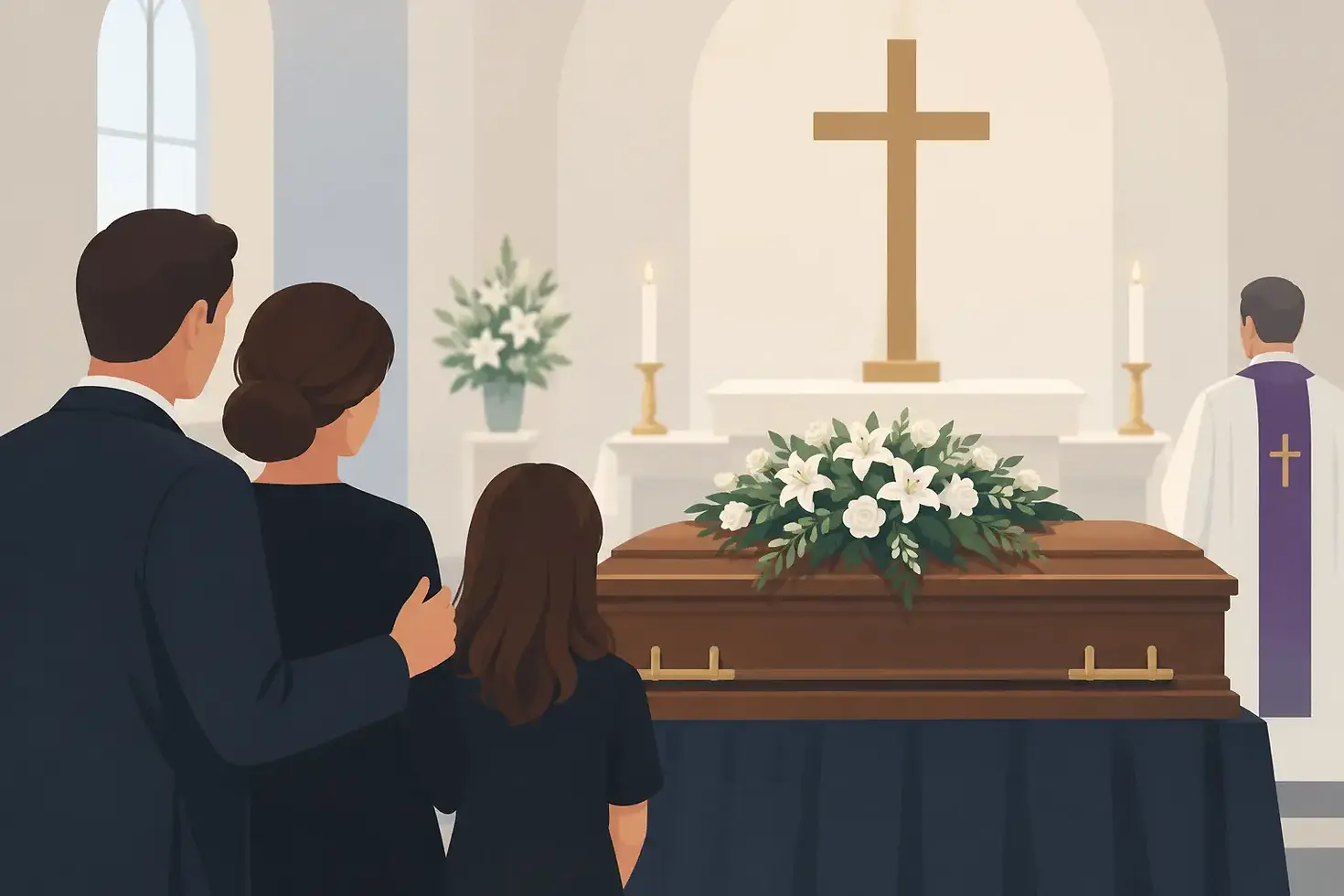
The Funeral Mass is usually celebrated in the parish church, with the casket or urn present. During the Mass, the Church prays for the deceased and offers comfort through Scripture, music, and the Eucharist. The priest or deacon can help the family select readings and explain the parish’s guidelines for music, speakers, and tributes.
In some situations, a funeral liturgy outside of Mass may be more appropriate or may be the only option available. This can happen because of scheduling, the family’s needs, or parish practice. It remains a meaningful Catholic service centered on prayer for the deceased.
The rite of committal
The rite of committal takes place at the cemetery, mausoleum, or another approved place of burial. It is the final prayerful farewell as the loved one is laid to rest. The graveside service may be brief, but many families find it to be one of the most personal moments of the entire funeral.
Make Burial or Cremation Decisions Carefully
Catholic families may choose either burial or cremation. Traditional burial may include a casket, gravesite, vault or liner, and cemetery arrangements. For some families, this choice feels especially meaningful because it provides a permanent place for prayer, visitation, and remembrance.
Cremation may be chosen for personal, financial, or practical reasons. The Catholic Church permits cremation when it is not chosen for reasons contrary to Christian belief. When cremation is selected, families should speak with the parish about timing. In many cases, the Funeral Mass is held with the body present before cremation. In other cases, the cremated remains may be present for the liturgy, depending on diocesan and parish guidance.
Cremated remains should be treated with the same respect given to a body. The usual Catholic practice is to place them in a cemetery grave, mausoleum, or columbarium. Keeping remains at home, dividing them among relatives, or scattering them is generally not consistent with Catholic guidance. Your funeral director and parish can help you understand the options available locally.
Gather the Details That Tell Their Story
Funeral planning includes practical information, but it is also an opportunity to reflect your loved one’s life and faith. Bring a recent photograph, full legal name, date and place of birth, family information, military history if applicable, and any preferences they shared about services or burial.
You may also want to prepare an obituary and select photographs for a memorial display or printed program. Keep the obituary accurate and simple at first. It can include a short account of the person’s life, close family members, service details, and a meaningful note about their character, work, faith, or service to others.
For the liturgy, ask the priest or funeral director what personal touches are appropriate. A family member may be able to offer a brief eulogy at the vigil or reception, while the homily at Mass is reserved for the priest or deacon. The church may have guidelines for music, flowers, and photographs near the altar. These guidelines are meant to preserve the prayerful focus of the service, not to diminish your family’s remembrance.
Prepare for Costs and Available Support
A funeral director should explain pricing and service choices clearly before arrangements are finalized. Ask for an itemized statement and take time to understand which services are required, which are optional, and what is included in each package. Costs may involve professional services, transportation, care and preparation, a casket or urn, printed materials, clergy or church fees, cemetery charges, flowers, and reception expenses.
If there is a pre-need policy, locate the paperwork early. Families are sometimes surprised to learn that an existing policy may be transferable to another funeral home. A funeral professional can review the policy and explain what benefits may be available. If there is no plan in place, focus first on the arrangements that are most important to your family and your loved one’s faith.
Do not feel pressured to make decisions based solely on what others have done. A modest visitation, a prayerful Funeral Mass, and a simple graveside committal can be deeply meaningful. What matters most is that the service reflects love, respect, and the beliefs of the person being remembered.
On the Day of the Service
Choose one or two family members to serve as points of contact for the funeral director, parish staff, and relatives. This allows close family members to be present emotionally rather than answering every question. Give readers, pallbearers, and those bringing up the gifts clear instructions in advance.
Arrive early enough to gather yourselves before guests begin arriving. It is okay if emotions are visible. Grief is not a failure of preparation, and no family needs to perform perfection on this day. Let the prayers, the people around you, and the structure of the rites carry some of the weight.
The days after a death can move quickly, but you do not have to carry every decision alone. Begin with the next necessary call, ask questions when something is unclear, and give your loved one the prayerful farewell that feels true to their life and your family’s faith.


Comments